
As AI video technology advances apace, Jonathan McCrea considers what this means for truth and democracy in his latest column.
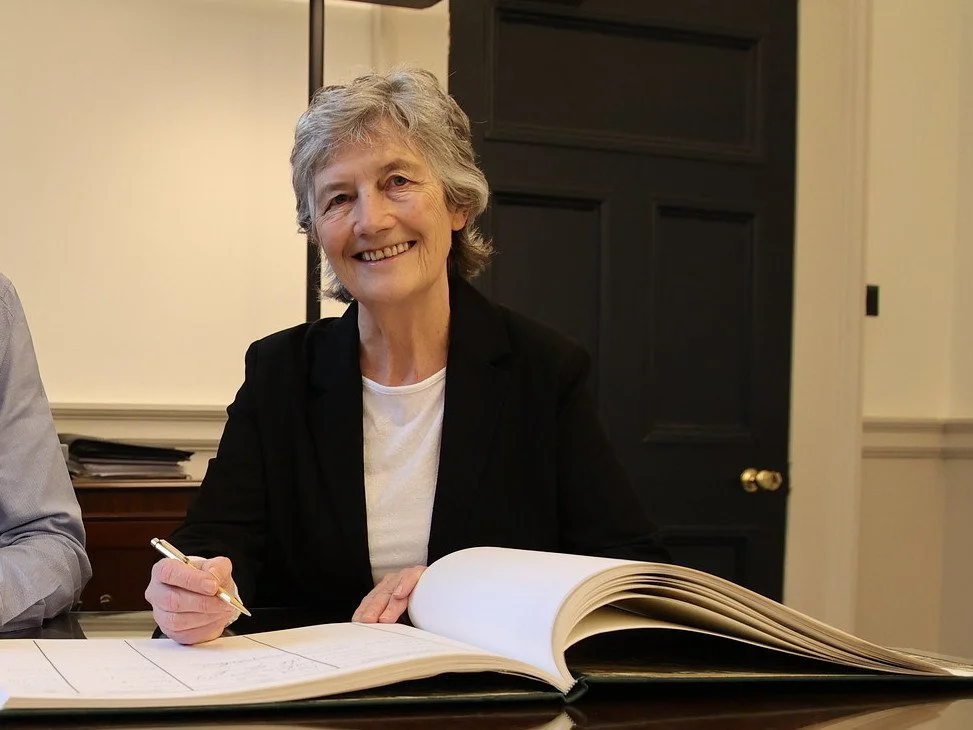
Nice try nerds. Despite the best efforts of some tech-savvy wags, Catherine Connolly was last weekend duly elected president of this island of wild dogs.
Save the excoriation of Jim Gavin, nobody can deny that the entire election was unsatisfyingly dull this time round by Irish standards, and in comparison to similar competitions beyond our borders, it was a downright snoozefest.
That was until the appearance of a video showing what seemed to be an RTÉ news package that detailed the withdrawal of Catherine Connolly from the race, with Connolly herself appearing to make the announcement from a podium at a public address. While we have been drowning in AI videos for quite some time now, the talking point fuelling talk shows up and down the country was that the video was made with political malice, clearly intended to dissuade voters from showing up. Also, it was surprisingly good.
To be clear, it does not take a wizard of technology to generate deepfakes today. There are drop-and-drag sites out there, and if you have €50 and half a day, it’s pretty easy to create a social video that will be hard for people who aren’t on social media to determine its authenticity.
And, not to sound like a broken record, but it is really important to understand that we are in the absolute infancy of this technology. Sora 2 is much easier to guide than Sora, Veo 3.1 much more obedient than Veo 3. The same can be said of so many other newer, better video models, which are oozing into existence every single day – Kling, Seedream, Runway ML, the competition and innovation is dizzying.
So, what can we do to preserve truth and safeguard democracy. These were the questions whispered on many people’s lips last week? Can we train people to spot AI? Can we ban deepfakes, or enforce digital fingerprints? Can we track and identify the creators?
The answer to all of the above is a loud and emphatic no. While Europe tries desperately to cling some decency and decorum in the all-out bunfight for AI supremacy, we humble citizens of the world can only watch as the line between truth and authenticity is obliterated.
We have passed the Turing test for written word, voice and images already. I can generate any of these and you would not be able to tell me if they had come from a machine without using a machine yourself. We are close to that point with video. I would imagine we’re probably less than a year off.
Is it time to panic? We have had Adobe Photoshop for years – is this any different? Well, it depends of course, on what is important to you and where you find yourself standing on the ladder of life.
If you’re a political strategist, a state-level operative, or just a well-funded evil mega-corp, this isn’t a crisis – it’s an opportunity. It’s the ultimate escalation in narrative warfare. Photoshop allowed us to airbrush reality; generative video allows us to fabricate it wholesale. No specialist skills required. Why worry about a deepfake scandal when you can simply commission ten more to dilute the truth until it’s meaningless? For those at the top of the ladder, AI is simply the next generation of an ancient weapon.
But if you’re the rest of us?
If you’re the voter trying to make an informed decision, or the parent trying to guide your kid through reality and unreality like some nightmarish mashup of Black Mirror and Is it Cake? Or simply a person who believes that a shared set of facts is necessary for a society to function? Then yes, this is profoundly different.
We are no longer just questioning the authenticity of images, we are wondering about the authenticity of events, present and historical. And this new era we will find ourselves in, having to fact-check everything we see all the time will be as impossible as it is exhausting. It will inevitably lead to community-based reality as it already has in the once ‘great’ US.
The age of ‘seeing is believing’ is over. We are now in the age of ‘trusting your tribe’, where the only ‘truth’ that matters is the one that comes from your own bubble. Like another bad Marvel multiverse movie, the only thing that matters is which reality you want to live in. Grab the popcorn, folks.
For more information about Jonathan McCrea’s Get Started with AI, click here.
Don’t miss out on the knowledge you need to succeed. Sign up for the Daily Brief, Silicon Republic’s digest of need-to-know sci-tech news.
